Right now, putting out content online means little if it sits unseen. To pull in steady streams of interested readers, planning matters more than guessing. A smart approach to search-friendly writing builds momentum slowly, matching what people actually look for. Thinking ahead beats chasing quick wins every single time.
Right from the start, a solid plan does more than boost search engine rankings – it guides your material straight to people who need it. When they arrive, what they find actually responds to what they’re asking. Over time, useful responses turn visitors into repeat buyers. This walkthrough shows each step of shaping content that pulls in steady clicks without burning out resources.
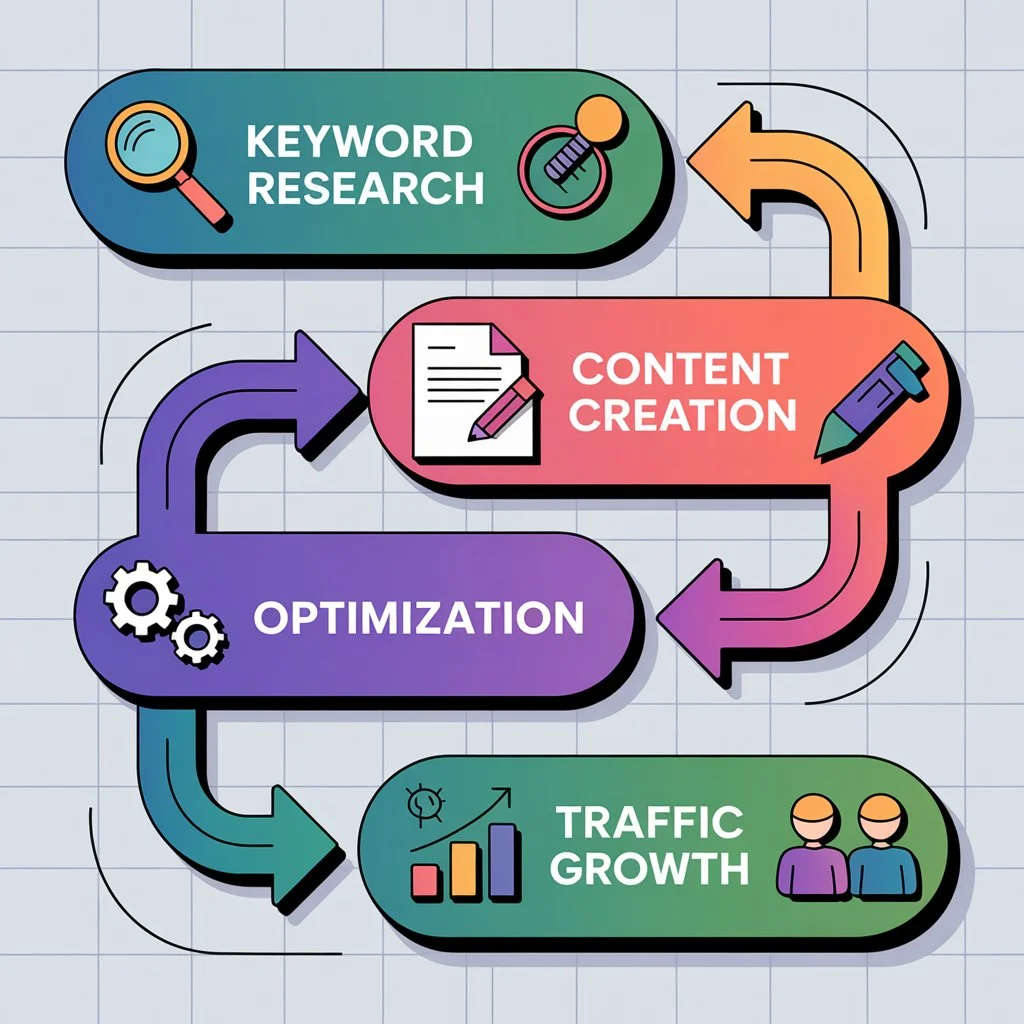
Table of Contents
Understanding SEO Content Strategy?
A plan for SEO content strategy shapes how material gets made, fine tuned, then handled – all aimed at showing up better in search engines. Researching terms people type comes first, followed by mapping out topics, adjusting pages carefully, checking results later.
The main goal is simple:
Match your content to real search queries so people can find it naturally. What folks type matters most when they hunt online. Build around those words without forcing it. When answers fit questions, visitors show up. Think like a searcher, write like yourself. Found through relevance, not tricks. Let clarity pull them in instead of noise.
Reasons for Having an SEO Content Plan for SEO Content Strategy?
Most times, things just drift apart when there is no map to follow. Still, having solid direction turns scattered tries into something that actually moves forward
- Slowly grow visitors from search engines over time
- Improve search engine rankings
- Build authority in your niche
- Target the right audience
- Generate leads and conversions
Put simply, this transforms scattered ideas into something that drives steady progress.
Step 1: Understand Your Target Audience
Start by thinking about the person reading what you write. When you get how they see things, words land better – fixing actual issues instead of guessing. Content shaped this way sticks because it speaks directly, skipping vague ideas. It connects when effort meets need without extra noise.
Ask yourself:
- What are their pain points?
- Curious about what folks search for on the web?
- Which kind of material catches their interest?
Knowing your readers well makes your SEO content strategy work harder. When you see what they need, each word fits clearer.
Step 2: Smart Keyword Research
Start by understanding what people actually search for online. Picking narrow terms beats aiming at popular ones that everyone fights over
- Long-tail keywords
- Question-based keywords
- Low to medium competition keywords
Take “content optimization” rather than just aiming at SEO. Pick a narrower path that skips the broad term entirely
“how to build an SEO content strategy”
People who already want what you offer are more likely to find you. Starting there makes everything else easier down the line.
Step 3: Focus on What People Are Searching For
Most folks overlook what someone really wants when they search. Behind each question lies a reason.
Four kinds show up most often
- Informational (learning something)
- Navigational (finding a specific site)
- Transactional (ready to buy)
- Before spending money on something meant for business, look into it first
Start by understanding what people really want when they type those words. When a how-to is needed, skip the pitch entirely – just show clear steps instead. What matters comes through best without filters or filler. Help first, everything else follows quietly.
Step 4: Create high quality valuable content
What makes some websites stand out? What matters most is the actual quality of what they put out there. Pages stand out when they match what people are searching for, provide real value, yet feel trustworthy without trying too hard.
To create high quality content:
- Write in a clear, natural tone
- Use real examples
- Keep it well structured
Stick to what matters. Each section brings something useful. Nothing extra slips in.
Step 5: Optimize On Page SEO Elements
Start by making sure your material works well with search tools for SEO content strategy. That way, it gets picked up faster and sorted without trouble.
Key elements to optimize:
- Title (include your primary keyword)
- Meta description
- Headings H1 H2 H3
- URL structure
- Internal linking
- Image alt text
Good tuning lifts search position while making things easier for visitors.
Step 6: Build Topic Clusters
Start by grouping related ideas together, so each post supports another. Build one idea after the next, linking them through shared themes. Focus on depth, not scattered thoughts – shape topics that grow out of a central subject.
A topic cluster includes:
- A main pillar page (broad topic)
- Supporting blog posts (related subtopics)
For example: Pillar Search Engine Optimization Content Plan
Cluster posts:
- Keyword research tips
- On-page SEO guide
- Content optimization techniques
Search engines might rank you higher when they grasp what you know, thanks to how things are set up here. Understanding comes easier through this kind of setup, which could lift where you show up online.
Step 7: Maintain Consistency
Staying steady matters most when gaining trust. Vanish after a single post, wait weeks – nothing comes of it.Sticking to a plan means showing up regularly. A schedule keeps things moving without surprises. Following through builds momentum over time. Missing steps slows progress more than you think
- 1–2 high-quality blogs per week
- Regular updates to old content
- Consistent posting schedule
This slow growth earns user confidence just as much as it does the algorithms’. Trust grows quietly but steadily on both sides.
Step 8: Focus on user experience
A visitor might stay just long enough to notice how hard it is to navigate. Though the page shows up first in searches, frustration builds fast when buttons don’t work right. Pages load slow, eyes scan then leave. Confusion lingers after a click leads nowhere. Ranking high means little when the site feels broken.

Improve UX by:
- Using short paragraphs
- Adding bullet points
- Improving page speed
- Making your site mobile-friendly
Reading becomes simpler when words flow naturally, so people remain longer on the page. This staying power catches search engines’ attention as a quiet sign of worth.
Step 9: Track performance and make improvements
Most plans fall short if they skip checking results. Try using apps such as Google Analytics along with Search Console to follow what happens and see how things grow
- Organic traffic
- Keyword rankings
- Bounce rate
- Time on page
For SEO strategy look first at what works, while noticing what drags behind. When it becomes clear, turn attention to lifting up the slower bits. Tweak every part using actual outcomes instead of guesses.
Common Mistakes to Avoid
Start by skipping the usual mistakes people make when shaping up their SEO content plan for SEO content strategy.
- Ignoring keyword research
- Overstuffing keywords
- Writing for search engines instead of humans
- Publishing low-quality content
- Not updating old posts
When errors pile up, progress drags. Skip those missteps, then momentum builds without extra effort.
Final Thoughts
True growth in search visibility comes from steady effort rather than quick fixes. Staying regular with output matters just as much as what you create.
When you focus on:
- The right keywords
- Valuable content
- Proper optimization
- Continuous improvement
A well-built setup pulls in visitors while slowly growing trust over time. One piece feeds the next, creating momentum without constant effort. Growth sticks around when structure works behind the scenes.
Quick Recap
- To build an effective SEO content strategy:
- Understand your audience
- Do smart keyword research
- Focus on search intent
- Create valuable content
- Optimize for SEO
- Use topic clusters
- Stay consistent
- Improve user experience
- Track and refine your strategy
Done well, these steps mean your site gets visitors who actually belong there – people likely to stick around. A steady flow of real interest follows when fit matters more than numbers. Right users find their way naturally, then stay because things make sense.